Improving and Modernizing the North Carolina Judicial System
What changed after eCourts and Iryna’s Law.
Since 2023, paper files gave way to a statewide digital system, pretrial rules were rewritten, and a fight over disciplining judges reached the governor’s desk. Some changes drew wide support. Others split the legislature and are still open.
Key Changes to North Carolina's Courts Since 2023
| Date | Change | What It Did |
|---|---|---|
| Feb. 2023 | eCourts pilot | Wake, Harnett, Johnston, and Lee counties moved to digital case management |
| Oct. 2023 | State budget | Raised the retirement age for appellate judges to 76, while trial judges stay at 72 |
| Dec. 2024 | Senate Bill 382 | Abolished the Courts Commission and set one Wake superior court district to end in 2029 |
| Oct. 13, 2025 | eCourts statewide | All 100 counties joined the same electronic filing and case system |
| Dec. 1, 2025 | Iryna's Law | Tightened pretrial release for people charged with violent offenses |
| Aug. 17, 2026 | House Bill 377 vetoed | Blocked, for now, a plan to let the chief justice suspend trial judges without pay |
An Engineer’s Repair Plan
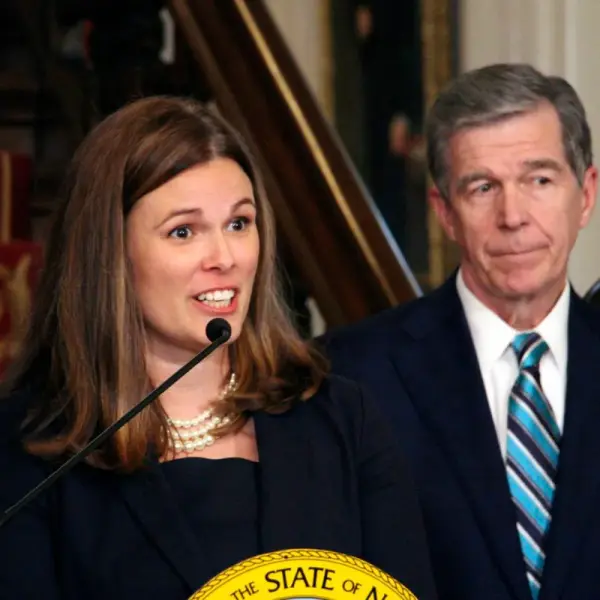
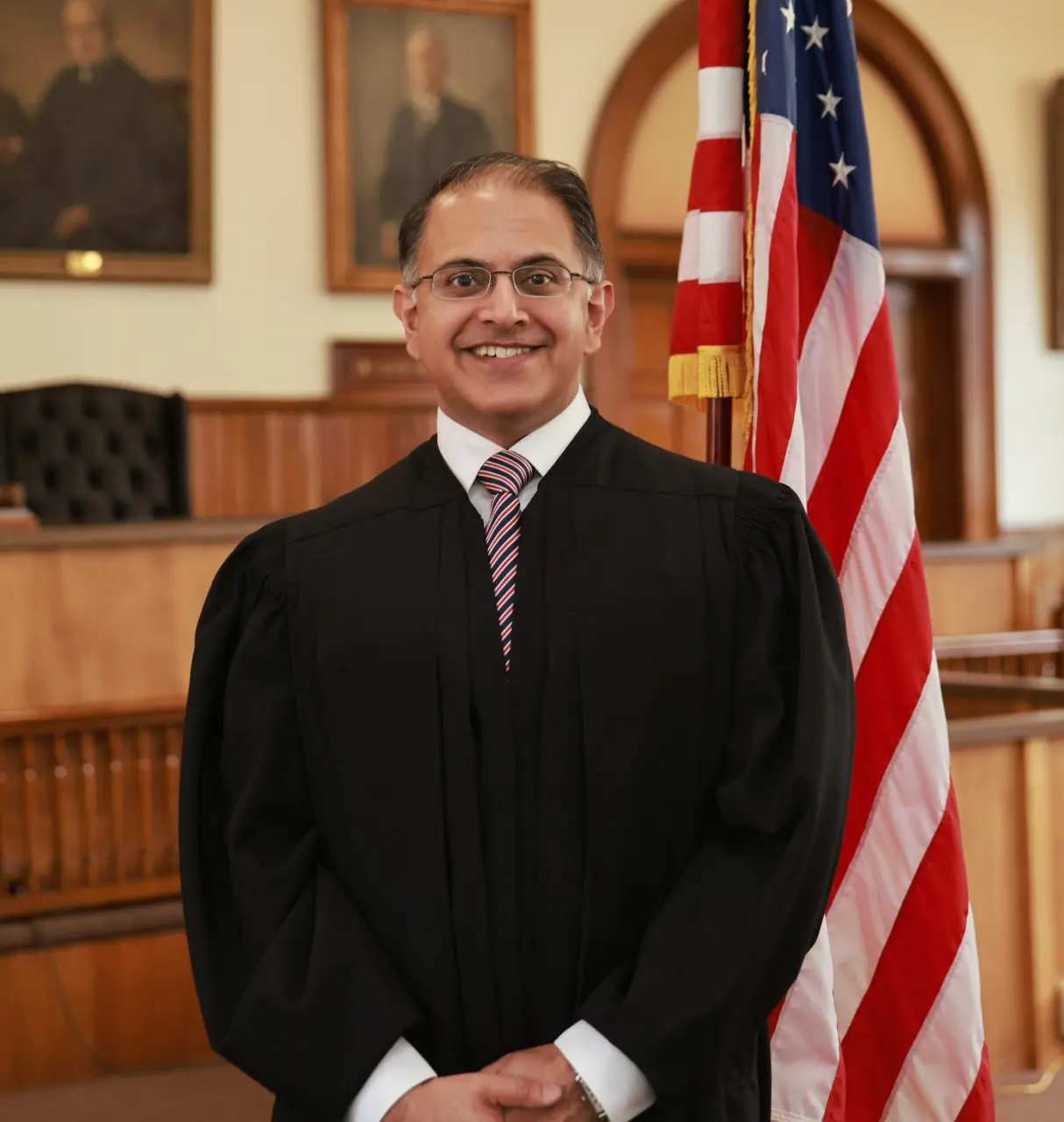
Listen to “An Engineer’s Plan to Fix the Courts” on The Joe Teague Jr. Show.
Where North Carolina Judicial System Reform Stands
Five fronts account for most of the change. Each sits at a different stage.
eCourts
The final 13 counties joined eCourts on October 13, 2025. The Wake Forest Law Review called North Carolina the first state to run every case type in every county on one cloud platform. The rough pilot months argue for more testing before launch and public error reporting after.
Iryna’s Law
Passed as House Bill 307 after Iryna Zarutska, a 23-year-old Ukrainian refugee, was fatally stabbed on Charlotte’s light rail in August 2025. Governor Josh Stein signed it on October 3, 2025, and most pretrial provisions took effect December 1. The UNC School of Government has a full guide.
Judicial Discipline
House Bill 377 would let the chief justice suspend district and superior court judges without pay during misconduct investigations, on the Judicial Standards Commission’s recommendation. The General Assembly ratified it on August 6, 2026, and Stein vetoed it on August 17.
Court Structure
Senate Bill 382, enacted in December 2024, abolished the Courts Commission, created two special superior court judgeships filled by legislative appointment, and changed how some appellate vacancies are filled. It eliminates Wake’s superior court District 10E on January 1, 2029.
License Suspensions
Researchers at Duke and North Carolina Central University have documented how often minor traffic cases end in a suspended license. House Bill 980, filed in 2025, would end suspensions based only on a missed court date or unpaid traffic debt.
Supporters and Critics
The two most contested changes drew sharp arguments. Supporters pointed to public safety, while critics raised judicial independence and the cost of carrying out the law.
On Iryna’s Law
The law limits release options for a new category of violent offenses, ends release on a written promise alone for many violent or repeat offenders, and lets the chief justice suspend magistrates. Supporters call it a needed response to failures in pretrial and mental health protocols. Stein praised the pretrial changes but called the death penalty provisions “barbaric,” and Mecklenburg County Sheriff Garry McFadden warned that local agencies lack the resources to carry out parts of it.
On House Bill 377
Stein said no other chief justice in the country holds the power the bill would grant and that it would chill judicial independence. House Speaker Destin Hall argued that judges who release violent defendants need to face consequences and pledged an override. The bill becomes law only if the General Assembly overrides the veto.
How to Judge North Carolina Judicial System Reform
Public confidence gives reformers something to protect. Keeping it depends on results people can check, such as cases that move on time and records that are right the first time.
62%
Registered voters confident in state courts in the National Center for State Courts’ 2025 State of the State Courts poll, more than said so of state legislatures, governors, federal courts, or the U.S. Supreme Court.
2028
The year three state Supreme Court seats, including Chief Justice Paul Newby’s, are next on the ballot.
What Justice Needs More Of
Hear “The ONE Thing We Need More of in the Justice System.”